Every spring we see it on the beach: riders who took the winter off, first session back, and by the third tack their legs are shaking and their back is talking to them. Then there are the riders who look like they never left. The difference isn't talent. It's what they did between November and March.
The good news: you don't need a gym membership or two-hour workouts. Kiting asks for a handful of very specific things, and you can train all of them at home in about 30 minutes, three times a week.
1. What Kiting Actually Asks For
- Balance: Your feet are on a moving board on moving water, all session long.
- Legs that absorb: Every chop, every landing, every edge is a squat under load.
- A core that holds: The harness pulls you sideways and forward for hours. A strong trunk keeps that load off your lower back.
- Grip and shoulders: Steering, sheeting in, holding the bar through gusts.
- An engine: Long upwind runs and walks back up the beach. More on that in VO2 Max.
2. The Three-Day Plan
Do these on non-consecutive days (for example Monday, Wednesday, Saturday). Start easy for two weeks, then add a set or a little weight.
Day A: Balance + Legs
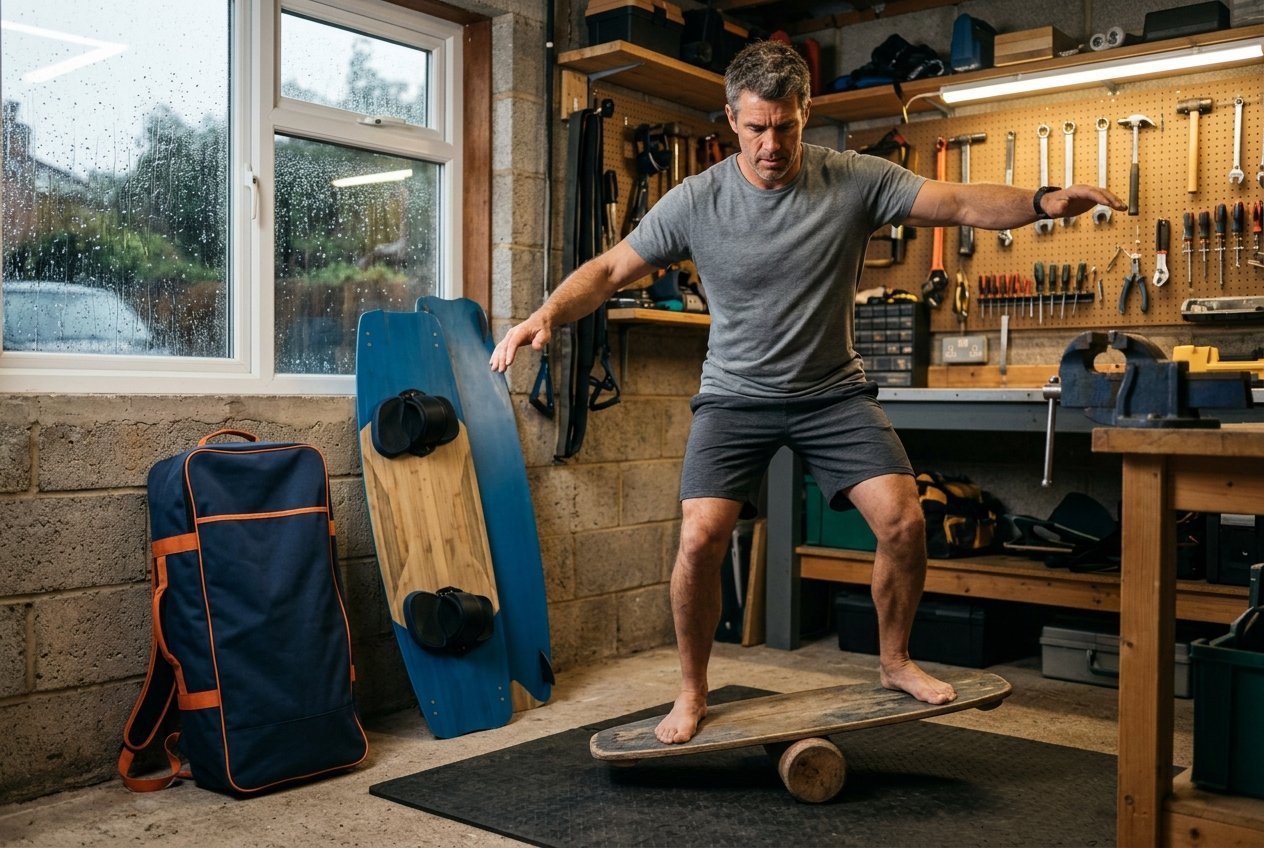
Balance board (an Indo board or a DIY plank on a pipe): 5 minutes, knees soft, eyes up, like riding. Goblet squats: 3 x 10, slow on the way down. Reverse lunges: 3 x 8 per leg. Jump squats with a soft landing: 3 x 6, land quietly with your hips back.
The quiet landing is the point: it teaches your knees and hips to absorb, exactly what you need after a pop.
Day B: Core + Back
Side plank: 3 x 30 seconds per side (the harness pulls you sideways, so train sideways). Dead bug: 3 x 10. Pallof press with a band: 3 x 10 per side, resisting the twist. Hip hinge / Romanian deadlift: 3 x 10.
Our harness back guide explains why these four protect your lower back better than crunches ever will.
Day C: Grip, Shoulders + Engine
Dead hang from a bar: 3 x 20 to 40 seconds. Band pull-aparts: 3 x 15. Farmer carries: 3 x 40 metres with something heavy in each hand. Finish with 15 minutes of intervals: bike, run or rower, 1 minute hard, 1 minute easy.
Hanging also gives your spine a nice decompression after a week at a desk.
The Minimum Version
Busy week? Do 5 minutes on the balance board, 2 side planks per side and a 30-second dead hang. That's 10 minutes, and it still keeps the kite-specific stuff alive.
3. Keep the Kite Skills Sharp
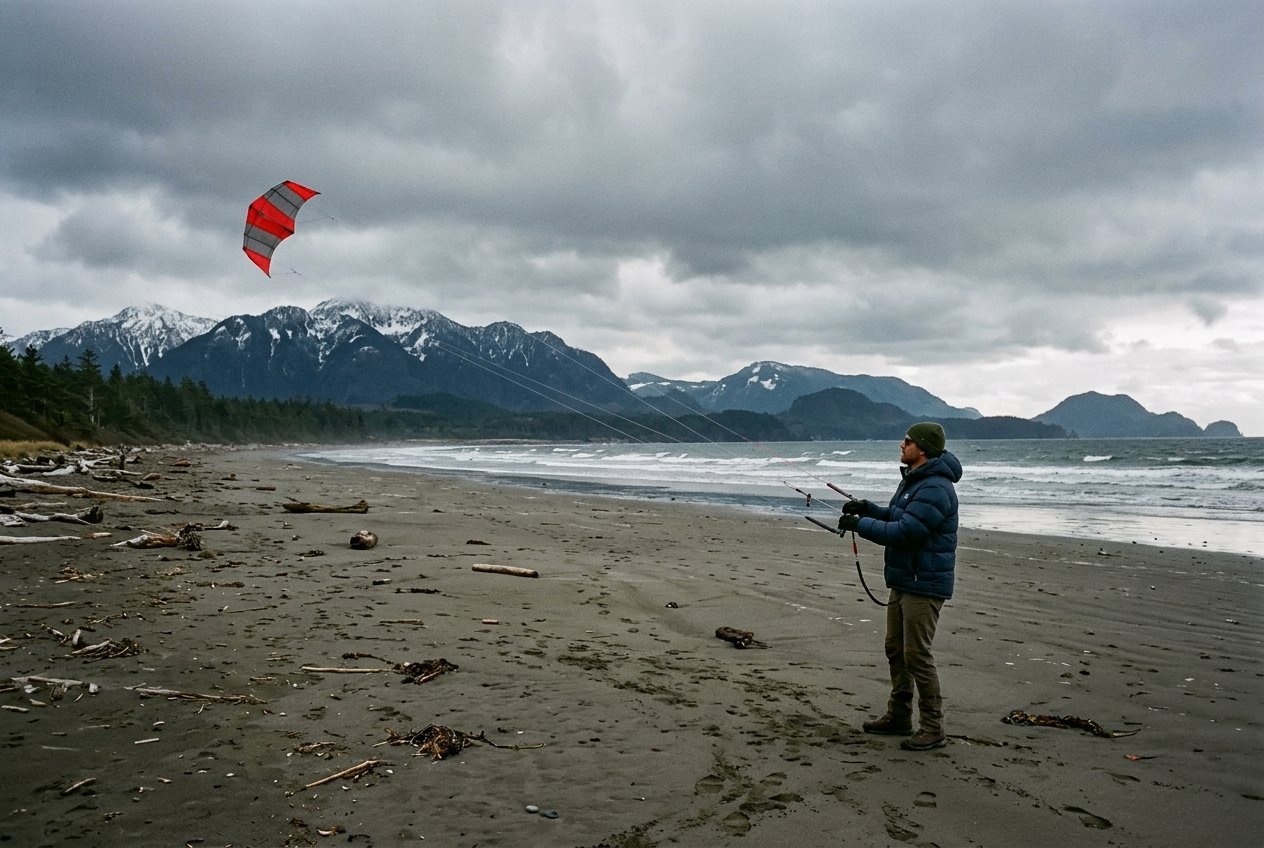
- Fly a trainer kite on a breezy day at the park or beach. Kite control is a skill that fades, and a 2-3 metre trainer keeps it sharp. Try flying with your eyes off the kite.
- Visualize your next trick. Athletes use mental rehearsal for a reason. Five minutes walking through the take-off, the pop and the landing in your head is real practice. More in The Mental Game.
- Catch the storms. Winter fronts can bring some of the best wind of the year. Being fit means you can say yes when the forecast lights up. Read Cold-Water Kiting before you go.
4. Don't Forget Mobility
Strength without range is how tendons get angry. Five to ten minutes of mobility after each session (hips, spine, shoulders, hamstrings) keeps everything moving. That's exactly what our free flexibility routine below is for. If your hips feel locked when you try to turn, add the drills from The Neurological Hip Lock.
5. Spring Payoff
Twelve weeks of this and the first session back feels like a mid-season session. Your legs last, your back stays quiet and you can spend your energy on learning, not surviving. Kiting for decades is mostly about showing up to each season ready, and winter is where that happens.
Winter Tutorials on the Channel
While the wind is off, the Kitehomiez channel is switching to tutorials and storm sessions. Tell us which trick you want to work on this winter.
Subscribe on YouTube →Free: The Kiter's 10-Minute Flexibility Routine
The mobility and core routine we use before and after sessions, as a free PDF. Plus new videos and posts every few weeks.
This article is for general education and isn't medical advice. Talk to your doctor before starting a supplement or a fasting routine, especially if you are pregnant, have a medical condition or take medication. Some links on this page are affiliate links: if you buy through them, we earn a small commission at no extra cost to you.