Kiteboarding in overpowered conditions is one of the most exhilarating athletic pursuits on earth. Holding down a hard edge in 30+ knots, loading up for explosive pops, and stomping heavy landings delivers a massive rush. But these same forces subject your body to intense shear vectors, lumbar compression, and rotational torque.
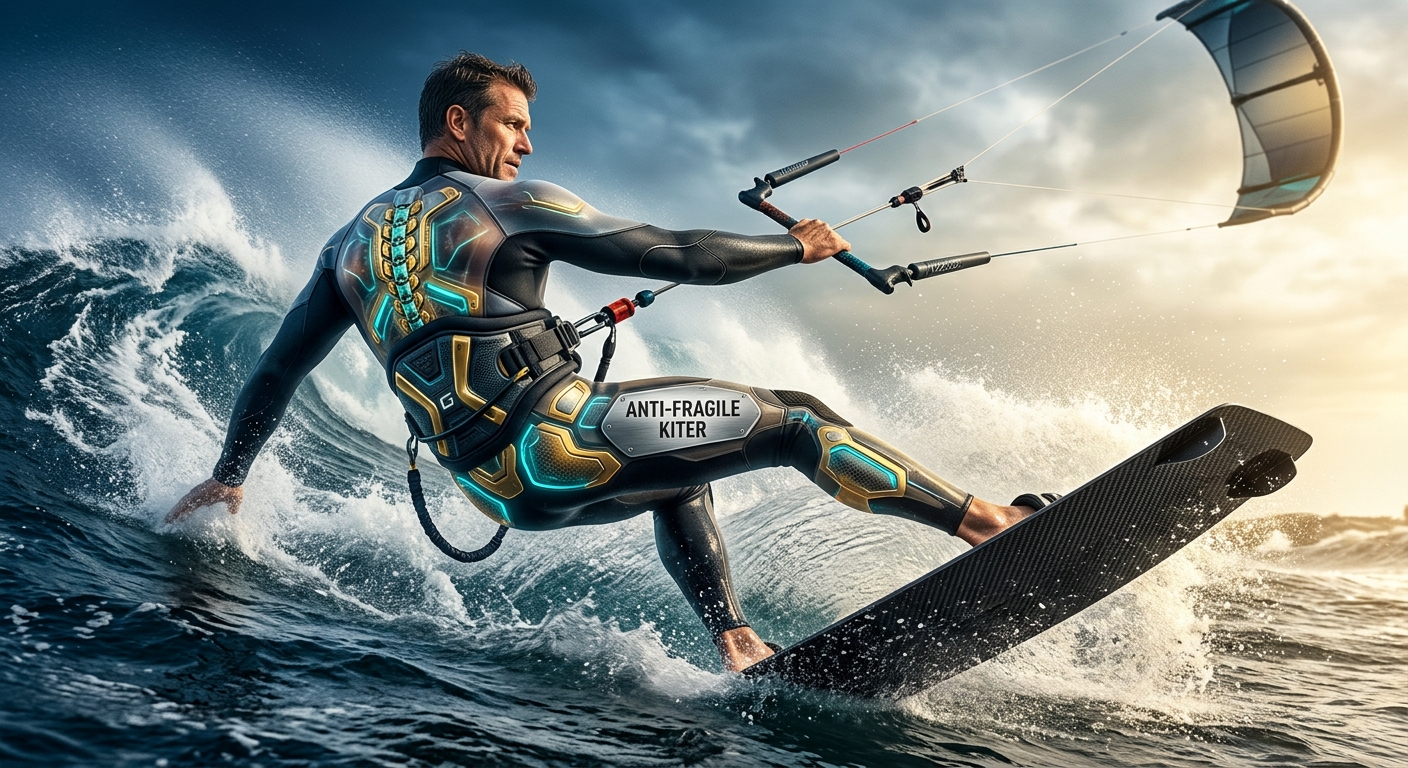
Many riders accept back stiffness, knee aches, or rib soreness as an inevitable cost of riding hard. But with smart structural conditioning, you can turn high-wind load into an asset that builds physical resilience rather than breaking you down.
1. Neutralizing the Harness Pull (Protecting the Lower Back)
When you hold a hard edge, the kite’s pull constantly tries to drag your hips forward and tilt your pelvis anteriorly, putting your lower back into hyper-extension under extreme tension. Over time, this leads to lumbar fatigue and disc compression.
To shield your spine and maintain maximum power transmission through the board, you need a quick pelvic reset strategy:
- Glute-to-Core Co-Contraction: Actively drive through your heels and squeeze your glutes on the water to tuck your tailbone into a neutral position.
- Anti-Extension Core Training: Off the water, prioritize movement patterns like hollow body holds, dead bugs, and front planks that train your core to resist back arching under load.
- Hip Flexor Opening: High-wind stances keep hip flexors shortened for hours. Daily active hip extensions restore range of motion and prevent your hips from tugging on your lumbar spine.
The Fast-Twitch Muscle Retention Secret
One of the biggest biomarkers of physical aging is the loss of type-II (fast-twitch) muscle fibers. High-load kiteboarding naturally preserves these fibers through explosive pop mechanics, jump takeoffs, and reactive balance. By keeping your joints stable and pain-free, you maintain the foundation to keep training speed, power, and agility well into your 50s, 60s, and beyond.
2. Stomping Landings Without Destroying Knees
High-speed crashes, choppy water, and flat landings put massive impact forces on your knees and menisci. Protecting your knee joints requires building dynamic dynamic stability above and below the joint:
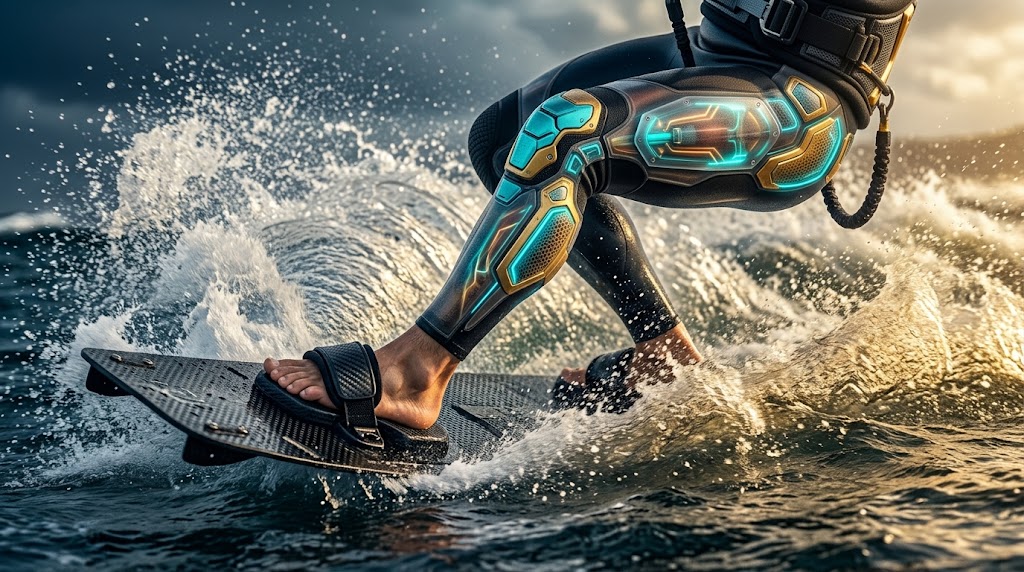
- VMO & Adductor Squeezes: Strengthening the vastus medialis (inner quad) and adductors ensures proper patellar tracking during heavy impact absorbents. Simple wall-sits squeezing a yoga block between your knees work wonders.
- Ankle Mobility Maintenance: Stiff ankles force your knees to absorb twisting and impact forces they aren't designed to take. Keep your ankle dorsiflexion mobile so your legs act as natural shock absorbers.
- Hinge-to-Squat Mechanics: Landing jumps with your hips back rather than letting your knees shoot forward shifts heavy shock forces into your glutes and hamstrings—the body's largest shock absorbers.
3. Rib & Thoracic Armor for Rotational Crashes
Rotational tumbles and heavy water impacts can easily strain intercostal muscles or irritate rib cartilage. Building thoracic flexibility allows your upper body to absorb unexpected twists smoothly:
- T-Spine Rotation Sweeps: Daily quadruped thoracic rotations keep your mid-back mobile so rotational stress distributes across your entire upper body instead of straining isolated ribs.
- Serratus & Lat Stability: Exercises like side planks with a reach fortify the lateral muscle shield surrounding your ribcage, acting as built-in armor against sudden water impacts.
- Passive Spinal Decompression: Hanging from a pull-up bar for 60 to 90 seconds after every session uses gravity to rehydrate intervertebral discs and decompress L4-L5/S1 after hours of harness load.
4. The Lifetime Rider Mindset: Recovery as a Tool
Staying on the water for life isn't about holding back—it's about smart adaptation. Pairing high-intensity session days with deliberate recovery protocols (like passive hangs, active mobility work, and adequate sleep) creates a frame that rebounds faster and stays injury-free. Keep your body mobile, protect your structural foundation, and the wind is yours for decades to come.
Build Your Internal Armor
Protecting your frame on the water is only half the battle. Supercharge your recovery, protect against mechanical stress, and keep your body performing like a machine with the DNA 15X1 protocol. Use code KITEHOMIEZ at checkout for 10% off your entire order.
Fuel Your Recovery Protocol